
The Ewaso Ng’iro River is the river that makes Samburu National Reserve work. Samburu is an arid to semi-arid protected landscape, and the river is what gives it ecological structure, wildlife density, and seasonal resilience. The reserve’s own guidance calls the Ewaso Nyiro River its ecological lifeline, while Kenya’s Water Resources Authority places Samburu, Buffalo Springs, and Shaba along the same river system.
This matters because Samburu is not just a reserve with a river passing through it. It is a dryland safari ecosystem organized around a perennial river corridor. The Ewaso Ng’iro shapes where vegetation stays green longest, where wildlife gathers in the dry season, where riverine birds persist, and how Samburu connects ecologically with Buffalo Springs and Shaba.
The Ewaso Ng’iro River, also commonly written Ewaso Nyiro, is the river ecosystem that makes Samburu National Reserve possible. It rises in Kenya’s central highlands around Mount Kenya, runs through the arid north, and continues for about 700 km toward the Lorian Swamp. Along the way, it supports the Samburu, Buffalo Springs, and Shaba reserve system and the people, wildlife, and dryland habitats that depend on it.
What is the Ewaso Ng’iro River?
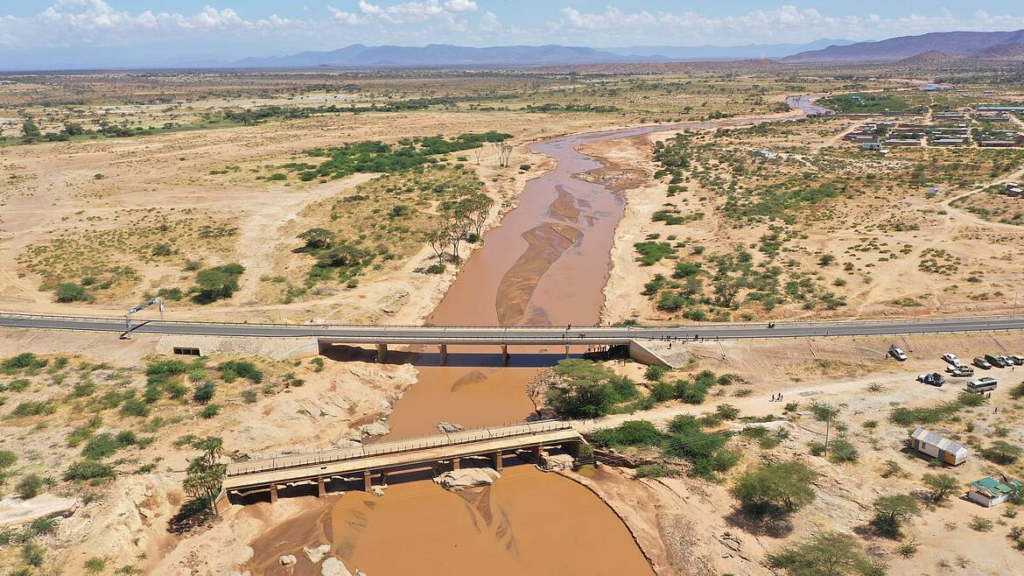
The Ewaso Ng’iro is the largest river in the Ewaso Ng’iro North Basin, with a catchment of about 81,750 km², or roughly 39% of the basin, according to Kenya’s Water Resources Authority. WRA says it originates in the high-lying areas around Mount Kenya and lists major upstream tributaries including the Ewaso Narok, Nanyuki, Isiolo, Osinyai, and Milgis rivers. WWF Kenya likewise describes it as a major river running through seven semi-arid counties and notes that its name refers to brown or muddy water.
That broader basin context matters because Samburu is only one section of a much larger river system. What visitors see inside the reserve is the downstream expression of a catchment that begins in wetter highland water towers and then feeds one of Kenya’s most important dryland river corridors.
WWF Kenya adds an important cultural and ecological detail: in local usage, the river’s name refers to muddy or brown water. WWF also emphasizes that in Kenya’s arid north, the river is a major source of life for both people and wildlife.
Why the river matters to Samburu National Reserve
The river matters to Samburu because it is the reserve’s main ecological anchor and defines the Reserve. As previously highlighted, the Ewaso Nyiro as a year-round river and the reserve’s ecological lifeline, sustaining a broad ribbon of biodiversity even during harsh dry spells. That description is not just promotional language; it matches the hydrological and ecological pattern documented by basin authorities and field research.
Samburu reserve sources state that the river forms the boundary between Samburu and Buffalo Springs, while the Water Resources Authority notes that Samburu, Buffalo Springs, and Shaba all lie along the same river. This means the river is not a background feature. It is the organizing geographic and ecological structure of the reserve cluster.
Wildlife research makes the ecological importance even clearer. A long-term elephant study in the Samburu-Buffalo Springs system describes the reserves as centered on the Ewaso Ng’iro, which is the only permanent water source in that semi-arid region and therefore a focal area for wildlife. A newer elephant-ranging study in the wider Laikipia-Samburu ecosystem similarly found that, during the dry season, the Ewaso Ng’iro was the only water source in the study area, which helps explain why elephants contract their activity toward the river when surface water elsewhere disappears.
In the wider reserve complex, the river also defines geography. The Ewaso Nyiro River borders Samburu to the south and separates it from Buffalo Springs National Reserve. WRA likewise places Samburu, Buffalo Springs, and Shaba along the same river. In practical terms, that makes the Ewaso Ng’iro the river corridor that links the entire Samburu reserve cluster.
The river creates Samburu’s most important habitat
The most important habitat in Samburu is not simply “bush” or “savannah.” It is the river corridor itself. Samburu’s own guide describes the Ewaso Nyiro as sustaining a broad biodiversity ribbon, while older reserve guidance explains that lush vegetation along the river is what supports large wildlife concentrations in the dry season.
That river effect creates the visual and ecological contrast that defines Samburu: a narrow green strip of riverine habitat set within a much drier matrix of scrub, bushland, and open semi-arid country. This is why the riverine edge holds such outsized importance for browsing mammals, birds, and predator-prey interaction. The inference follows directly from the cited descriptions of dry-season vegetation concentration, year-round water, and wildlife use near the river.
Why wildlife gathers along the Ewaso Ng’iro
Wildlife gathers along the Ewaso Ng’iro because permanent water is scarce in this landscape. A 2024 elephant-ranging study in the Laikipia-Samburu ecosystem found that, in the study area, the Ewaso Ng’iro was the only water source during the dry season. The same study found that elephants shift their core use areas relative to the river by season, with dry-season movement strongly constrained by access to water.
That pattern explains why the river is central to wildlife viewing in Samburu. Samburu’s reserve guidance says the dry season brings large concentrations of wildlife because of the lush vegetation along the Ewaso Nyiro River, the reserve’s main water source. SamburuReserve.org also notes that limited water sources in the dry season make animals easier to spot as they are drawn toward the river and other permanent water points.
WWF Kenya specifically links the river to elephants, giraffes, hippos, and cheetahs in Samburu, Shaba, and Buffalo Springs. Samburu County’s reserve overview also identifies the river as the ecosystem’s lifeline, sustaining elephants, hippos, and crocodiles
Birdlife is also tied to the river corridor. Samburu reserve sources record over 450 bird species and note that birds of the arid bush country are supplemented by riverine forest species. In other words, the Ewaso Ng’iro increases ecological diversity not only by attracting large mammals, but by creating habitat structure that supports a broader bird community than dry scrub alone would hold.
The river is also a connectivity corridor
The Ewaso Ng’iro is important to Samburu because it connects places as well as species. WRA locates Samburu, Buffalo Springs, and Shaba along the river, and Ewaso Lions describes its conservation landscape as including those three protected areas plus eleven community conservancies. That makes the river corridor part of a larger ecological network rather than a self-contained feature inside one reserve.
That wider framing matters for conservation. The 2005 Samburu elephant study noted that Samburu and Buffalo Springs together make up less than 2% of the greater Samburu-Laikipia ecosystem even though they sit at the core of elephant use because of the river. In practical terms, the Ewaso Ng’iro helps concentrate animals inside the reserves, but the ecological system that depends on it extends well beyond reserve boundaries.
Why the river matters to people as well as wildlife
The Ewaso Ng’iro is not only a wildlife river. WWF Kenya says it supports livelihoods and economic activity along its banks, and earlier Samburu research describes it as the primary source of permanently flowing water in the district. That shared dependence is one reason the river is so important to understanding Samburu: it sustains conservation, pastoralism, local settlement, and downstream water use at the same time.
That shared reliance can also create tension in drought years. Research on Samburu pastoralists and elephants notes that both people and elephants depend on the river and nearby water access points in dry periods, which can intensify competition around water. This is one of the reasons the Ewaso Ng’iro should be understood as a socio-ecological system, not just a scenic safari feature.
Dry season, wet season, and why the river shapes safari timing
The Ewaso Ng’iro is especially important in the dry season. Samburu reserve sources explain that dry months are often best for wildlife viewing because animals gather near the river and vegetation elsewhere is thinner, making sightings easier. Elephant research supports that pattern by showing that home ranges and core areas shift toward the river when dry-season water becomes limiting.
In the wetter months, the ecological pattern changes rather than disappearing. The 2024 elephant study found that ephemeral pools and more widely distributed forage become available away from the river in wet periods, allowing animals to range more broadly. That means the river remains important year-round, but its role changes from being an intense dry-season concentration point to being the anchor of a wider wet-season landscape.
The main threats facing the Ewaso Ng’iro ecosystem
The river’s importance is exactly what makes it vulnerable. WWF Kenya reports that water availability in the basin has declined because of longer drought periods, unsustainable farming practices, and degradation of forests and wetlands, while a later WWF report on the basin’s tributaries documented over-abstraction, illegal water connections, poor irrigation methods, and pollution from agrichemicals.
The Water Resources Authority adds another layer of risk by noting that parts of the basin, including Archer’s Post, are susceptible to flooding, while WRA and World Bank materials both frame the Ewaso system as vulnerable to broader catchment degradation and hydrological stress. For Samburu National Reserve, this means the river is simultaneously its greatest ecological strength and one of its most exposed conservation dependencies.
Why the Ewaso Ng’iro River deserves its own guide
A serious Samburu guide should treat the Ewaso Ng’iro River as a primary entity, not as a side note under geography. The river explains why Samburu has dense riverine wildlife in an arid setting, why elephants and other species concentrate where they do, why the reserve connects so closely with Buffalo Springs and Shaba, and why upstream land and water management matter directly to the safari experience downstream.
Put simply, Samburu National Reserve is not just a reserve with a river running through it. It is a dryland reserve whose ecology is organized by the Ewaso Ng’iro River. That is why the river is one of the most important conservation and safari-defining features in northern Kenya.
Frequently asked questions
Is the Ewaso Ng’iro River the same as the Ewaso Nyiro River?
Yes. Both spellings are used for the same river in Samburu and in basin-level sources. The variation is common across tourism, conservation, and water-management references.
Why is the Ewaso Ng’iro River important to Samburu National Reserve?
It is important because it provides the reserve’s key dry-season water source, creates its riverine forest and doum palm habitat, supports wildlife concentrations, and links Samburu with Buffalo Springs and Shaba in one connected river ecosystem.
Does the river separate Samburu and Buffalo Springs?
Yes. Samburu reserve sources state that the Ewaso Ng’iro forms the boundary between Samburu National Reserve and Buffalo Springs National Reserve.
What animals depend most visibly on the river in Samburu?
Elephants are the clearest example in the research literature, especially in the dry season, but WWF Kenya and Samburu reserve sources also associate the river with giraffes, hippos, cheetahs, crocodiles, and the reserve’s rich riverine birdlife.
What threatens the Ewaso Ng’iro River ecosystem?
The main pressures identified in recent basin reporting include drought, catchment degradation, tributary drying, over-abstraction, illegal water connections, inefficient irrigation, wetland decline, and pollution from agriculture.